
One year since launching, James Morgan describes the genesis of The Engineers Reuse Collective and explains how the organisation is building knowledge and helping engineers to advocate for greater reuse across the industry.
Why reuse matters
Engineers understand that the climate emergency and biodiversity loss are defining challenges of our time. The built environment sits at the heart of that challenge: the UK construction industry generates around 62% of the nation’s waste. While a large proportion of this material is diverted from landfill, it is very rarely retained as high value building components. Instead, most ‘recovered’ materials undergo energy-intensive recycling or downcycling processes that often yield far lower-value products – for example crushing structural concrete to produce granular fill.
If we are serious about reducing carbon, protecting resources and limiting our wider environment impact, this model must change. We already have a huge stock of useful materials locked up in the buildings around us, many with decades of service life still in them. We should be keeping these assets in use for as long as possible, and when buildings do reach the end of their life, prioritising the reuse of their components. This is the essence of the reuse hierarchy: retain, repair, refurbish, retrofit, remodel and repurpose. Preserving the value of materials in this way reduces waste, and reduces the energy consumption associated with producing new products.
Engineers have the ability and the responsibility to help shift the industry towards a genuinely circular approach – and it’s this belief that brought a small group of us together in 2023 to form The Engineers Reuse Collective.
How The Engineers Reuse Collective began
The Engineers Reuse Collective began with a simple idea. At a panel discussion on the circular economy in 2023, a handful of engineers realised that collaboration – not competition – could be the key to accelerating change. A few months later, representatives from six practices – Buro Happold, Civic Engineers, Elliott Wood, Heyne Tillett Steel, Webb Yates and Whitby Wood – met in an East London pub to explore how they could work together to make reuse a reality. What began as the idea of setting up a shared database of available materials quickly grew into something more meaningful: a shared platform for exchanging best practices, discussing barriers and learning from both successes and setbacks.
With support from Will Arnold and the Institution of Structural Engineers, the group moved from pub tables to the IStructE headquarters. In early 2024, Andy Yates, recently retired founder of Webb Yates, joined as Director and helped turn enthusiasm into structure and momentum. The Collective was incorporated as a not-for-profit Community Interest Company (CIC) later that year and was launched officially at the IStructE’s Reusing Existing Structures conference in December 2024. Within months, membership grew to 35 member and affiliate organisations – representing a cross-section of UK engineering practices.
What we achieved in our first year
In its first year, the Collective has grown into a genuinely collaborative community of engineers and practitioners, all working to push reuse further. What started as a handful of practices swapping ideas has become a place where knowledge is shared openly, challenges tackled collaboratively, and people feel supported to try new approaches on their projects.
A major focus has been on overcoming some of the most persistent barriers to reuse – particularly the assumption the reuse is inherently more expensive. In many cases, this perception stems not from actual costs but from perceived risk: uncertainty around material availability, specification, liability and programme often leads to conservative decisions. By sharing real project experience, discussing procurement routes, and comparing technical approaches, members are beginning to build a clearer understanding of where the true risks and costs lie and then use this understanding to advocate for reuse on their projects. This growing knowledge is helping us shift the conversation from ‘reuse costs more’ to ‘reuse is manageable and advantageous’. Challenges obviously remain, but we continue to build on the support, knowledge and enthusiasm of our members to collaborate and share knowledge to promote and advocate for greater reuse.
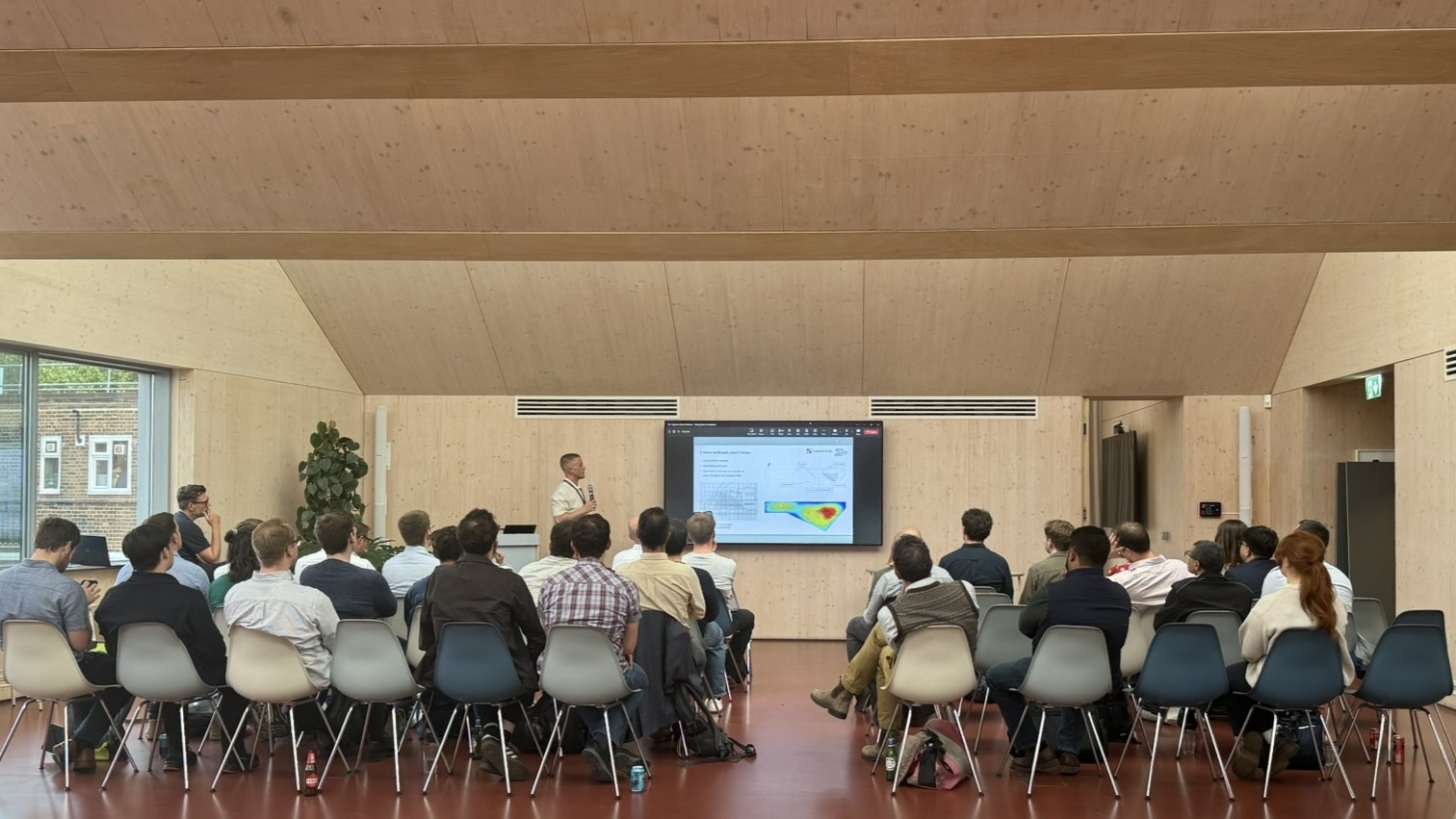
This knowledge sharing happens in many forms – Talking Reuse sessions, No Silly Questions discussions, working groups and a growing toolkit of resources. Recent outputs include the Reuse Glossary, developed to ensure we speak a consistent language when discussing reuse concept; the Reuse Resources Map, which brings together design standards, guidance and research related to structural reuse; and the Deconstruction Specification, offering suggested amendments to the NBS C20 specification to support the recovery of structural components. Across all of this work, the aim is the same: to build confidence and capacity across the profession, and to embed reuse across our day-to-day practice.
What comes next?
As the Collective enters its second year, the focus is shifting from conversation to action. The momentum of the past year has shown what’s possible when engineers collaborate; the next challenge is to translate that shared knowledge into common practice across the industry.
In the year ahead, we want to keep advocating for greater reuse across the profession, helping clients and collaborators understand what’s possible and why it matters. We’ll also continue developing the tools and guidance to help support our members, standardise methods, clarify technical pathways and make reuse a realistic norm. At the same time, we’ll be putting more emphasis on demonstrating real examples of reuse in action, sharing projects and lessons learned so other can see how challenges are being solved.
We’re also expanding our steering group to bring in new voices from across the UK and strengthening links with other organisations already championing circularity. This year, we’ll also begin engaging with other parts of the profession – including building services engineers – recognising that meaningful circularity depends on interdisciplinary collaboration, not just structural expertise. The goal is to build a broader coalition of engineers who see reuse as both a professional responsibility and an opportunity for innovation.
As we look to the year ahead, one thing is clear: the appetite for change is there. Our role is to keep the conversation going, keep the barriers coming down, and keep proving – through action, not just words – that a circular, low-carbon future for the built environment is entirely within reach. And we know we cannot do that in isolation. The more engineers who join us, share their experience and add their voice, the faster reuse will become a confident, mainstream choice across the industry. The Collective is open to all structural, civil and building services engineering firms, as well as other organisations championing circularity.
James Morgan is a Director at Heyne Tillett Steel and a Steering Group member of The Engineers Reuse Collective.