
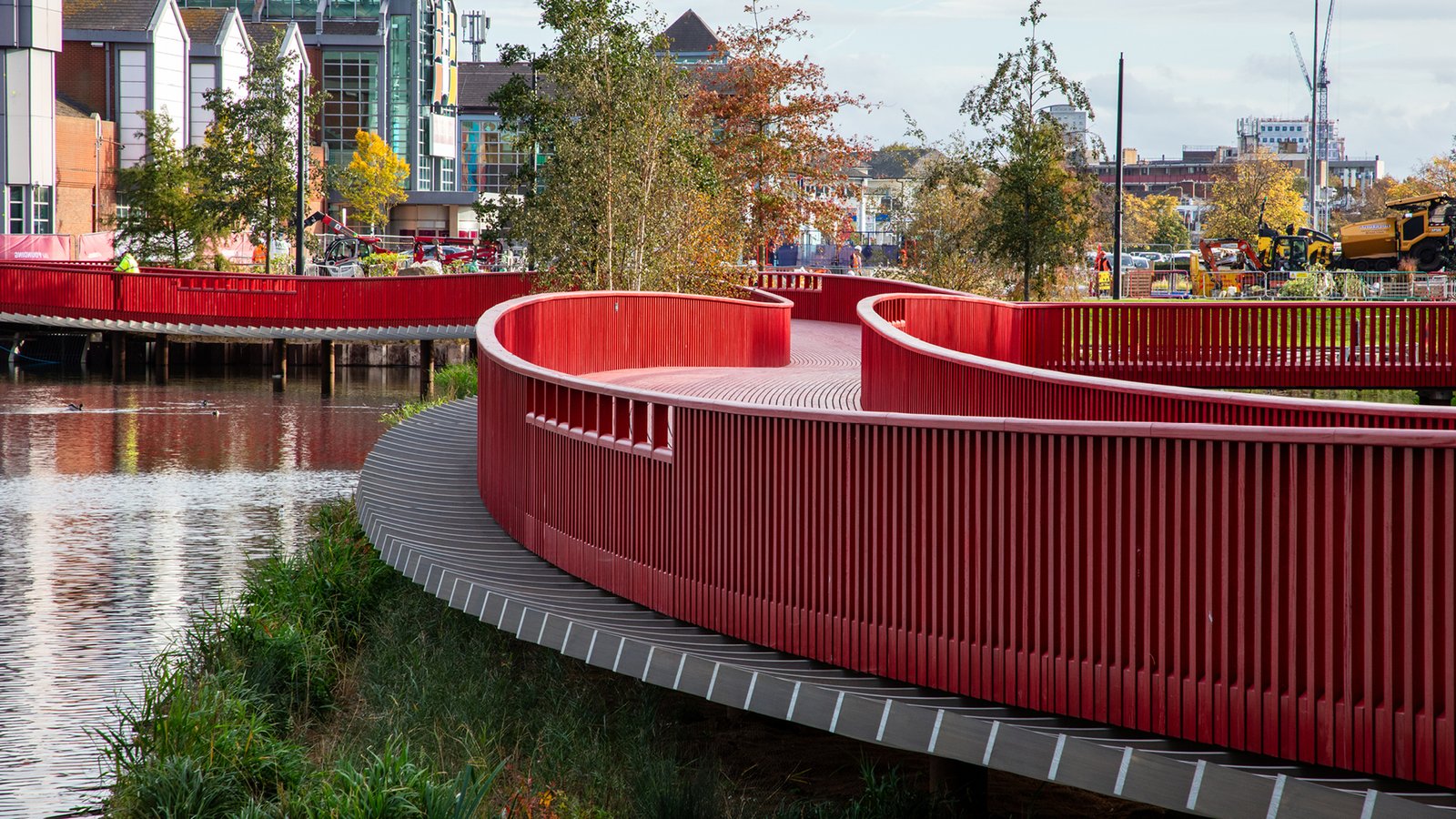
The Rafter Walk bridge demonstrates how repurposed materials can play a central role in modern structural engineering – not as a compromise, but as a carbon-conscious design choice.
This 170m long steel frame bridge, featuring distinctive timber fins and designed by Asif Khan Studio, spans the historic Canada Dock in London as part of British Land’s Canada Water Masterplan. Whitby Wood provided the structural, civil, geotechnical, and geo-environmental engineering for the scheme, delivering a sensitive design that balances aesthetic ambition with sustainability and practical constructability.
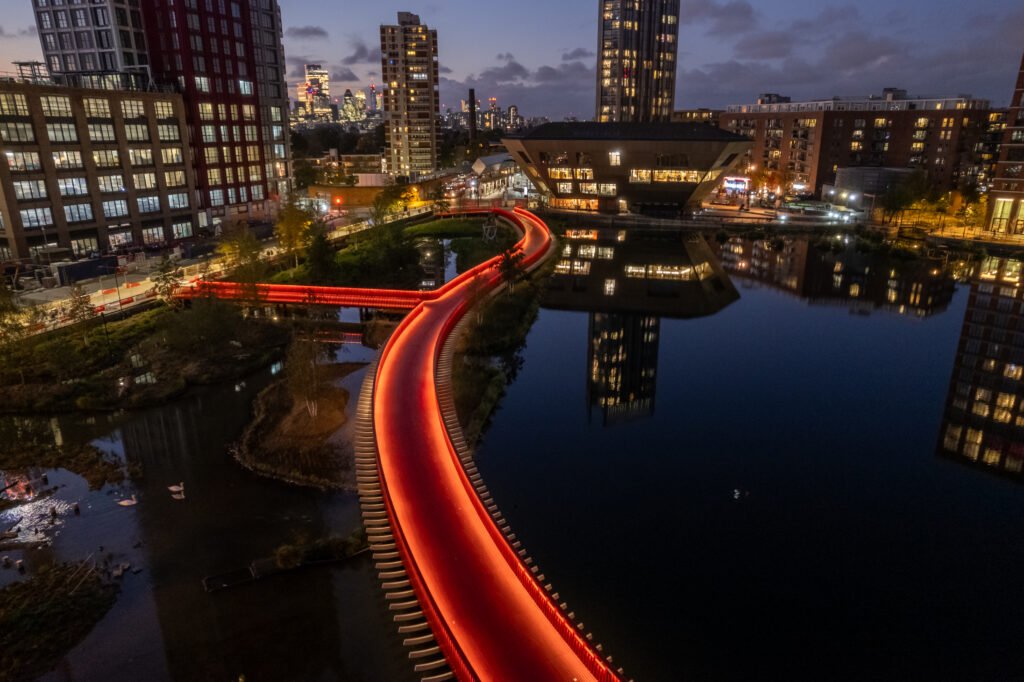
A key innovation was the use of repurposed steel tubular piles as foundations for the bridge. The boardwalk is supported on pairs of repurposed 356mm diameter steel tubes, used as piled foundations, supplied by Cleveland Steel and Tubes. Originally manufactured for gas distribution, these ex-stock seamless pipes were a cancelled order, offering sufficient material strength (higher than originally specified) and with certified mechanical properties. By repurposing these tubes, the project avoided sourcing new steel, reducing embodied carbon and promoting circular economy principles.
Installation required precise positioning to support the double-curved bridge deck, which spans typically 8m between supports. Tubes were driven using excavator mounted side grip vibrating hammers and back-driven 5–6m into the stiff clays beneath the dock, ensuring stability for the steel superstructure above. The ladder-frame arrangement of paired piles, coupled by cross elements, provided a robust foundation system capable of accommodating the timber bearer-supported decking and fin plates that anchor the architectural timber fins.
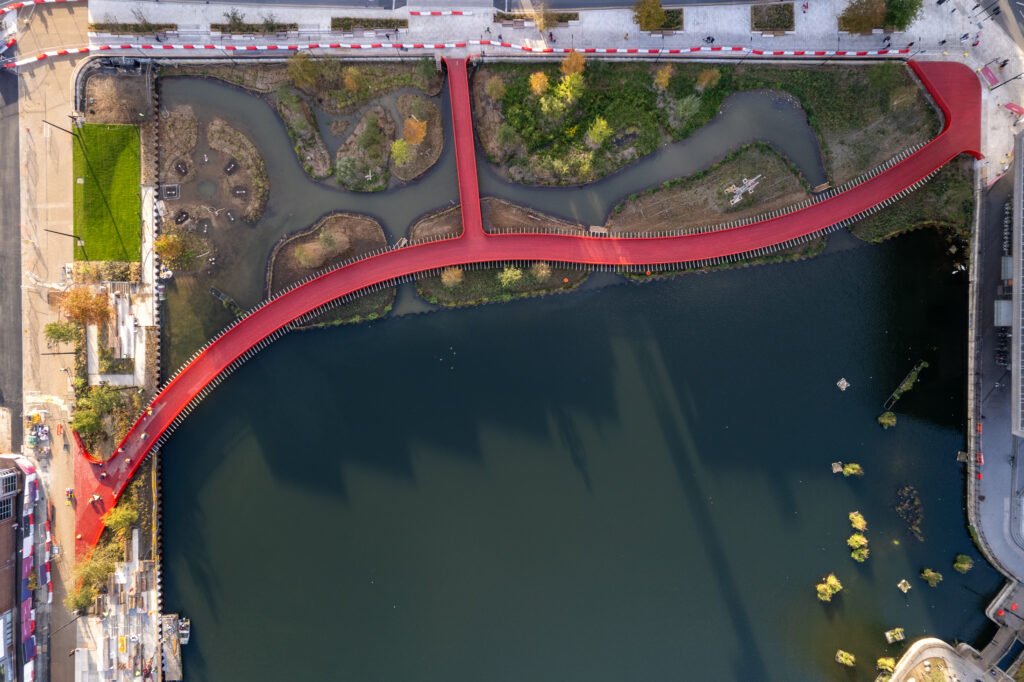
Rafter Walk not only provides a visually striking pedestrian route with environmental enhancements such as new wetlands and the Southern Steps, but it also showcases the potential for circular engineering solutions. By integrating repurposed steel into the primary structural system, Whitby Wood delivered a low carbon, technically rigorous, and contextually sensitive bridge, highlighting how existing resources can be transformed into durable, high-performance infrastructure.
Structural Engineer: Whitby Wood
Photography: Luke Hayes