
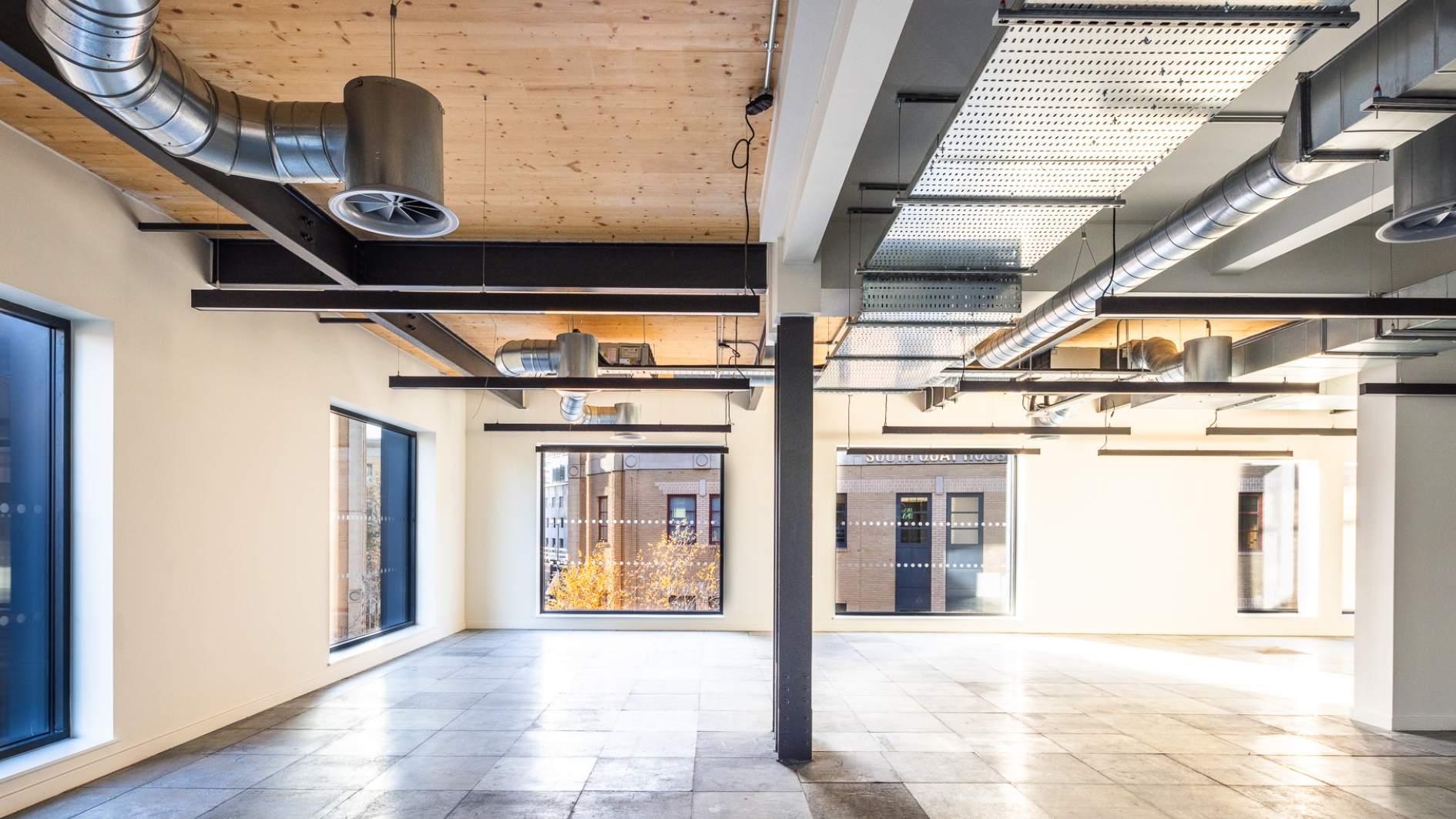
Neighbourhood North is a clear demonstration of how structural retrofit can unlock the value of existing commercial buildings while delivering substantial carbon and performance benefits.
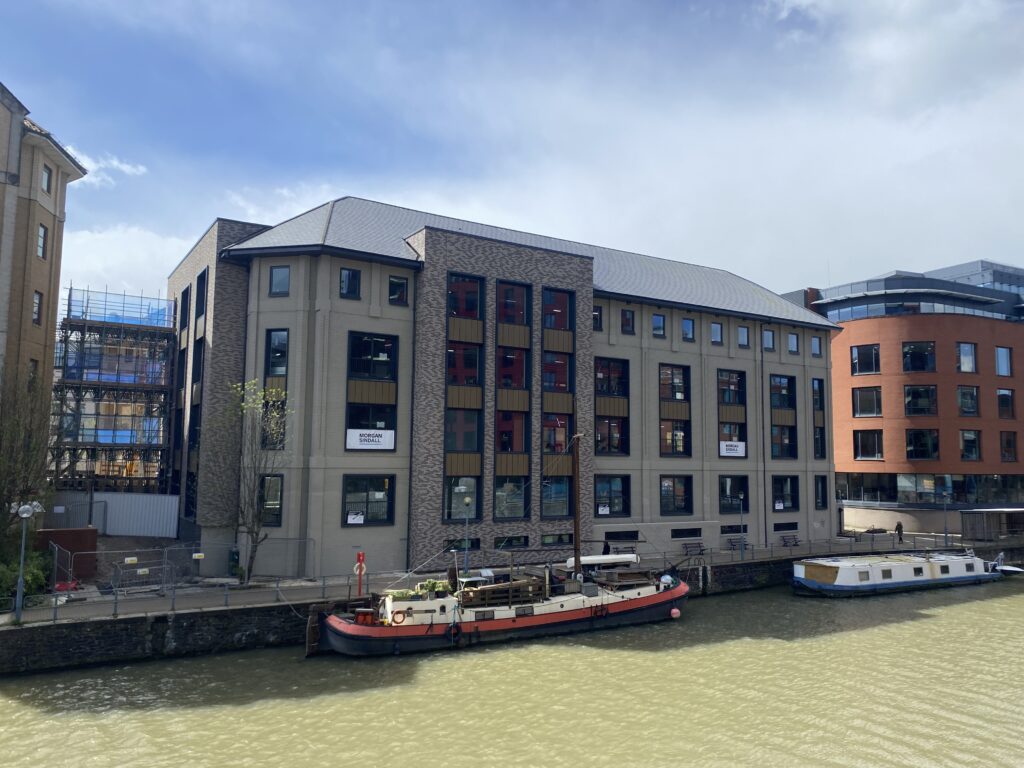
Integral Engineering Design supported the transformation of North Quay House, a four-storey 1980s quayside office building in Bristol, retaining and remodelling the existing steel-framed structure rather than pursuing demolition and rebuild.
The structural strategy focused on maximising reuse of the existing frame while accommodating new architectural and environmental aspirations. A new four-storey steel-framed corner extension with CLT floor decks was introduced to form a double-height atrium entrance and provide additional office space. This intervention was integrated with the retained structure to avoid unnecessary strengthening and to maintain continuity of load paths.
A key element of the retrofit was the upgrading of the building envelope. The existing masonry façade was retained but new larger windows were created to improve the thermal performance and daylighting. These needed some steel strengthening to avoid overloading the remaining masonry, however this approach still reduced overall material use.
Internally, the extension incorporated low-carbon materials, most notably cross laminated timber (CLT) floor slabs, reducing embodied carbon while working within the constraints of the existing steel frame. The embodied and operational carbon of options were considered with lifecycle analyses. In some cases, the monetary cost of an option, e.g. CLT floors versus PMF composite, was calculated as higher, but this was outweighed by the carbon saving and marketing potential.
Neighbourhood North achieved BREEAM Outstanding and EPC A ratings, demonstrating the effectiveness of a retrofit-first approach. By retaining and adapting the existing structure, the project has extended the life of a dated building, reduced waste and embodied carbon, and delivered a modern, low-energy workplace that reconnects with its waterfront context.
Structural Engineer: Integral Engineering Design